
Are you looking to improve your English speaking skills?
Do you feel like you've mastered reading, writing, and maybe even listening, but still find it extremely difficult to speak confidently?
Are you looking to connect with native speakers in a deep and meaningful way?
Well,
keep reading this post to see my tips and tricks on how to build your
speaking skills, regardless if you have someone to talk to or not!

✧| What are the Benefits and Difficulties of Speaking English Confidently?
Learning English can be a fun and exciting experience. And the best thing about it is the day you speak the words, phrases, and sentences you've learned with an English speaker and they actually understand!
This will clearly open many doors of opportunities for you, as English is recognized as an international, auxiliary language spoken by over 1.5 billion people worldwide.
However, it can also present some challenges and obstacles, especially when preparing to work, live, or study abroad. Exams such as the International English Language Testing System (or IELTS) test, specifically the speaking portion, requires students to not only express themselves across a wide array of topics, but also to speak with determination, fluency, and even passion about them.
So, Teacher Tzipporah, how do I overcome those difficulties you just mentioned? Scroll down to the next section and I'll tell you more!
✧| Steps to Speaking English Confidently
Now that I've finished the introduction for this post, let's get down to the nitty gritty details! What do you do?
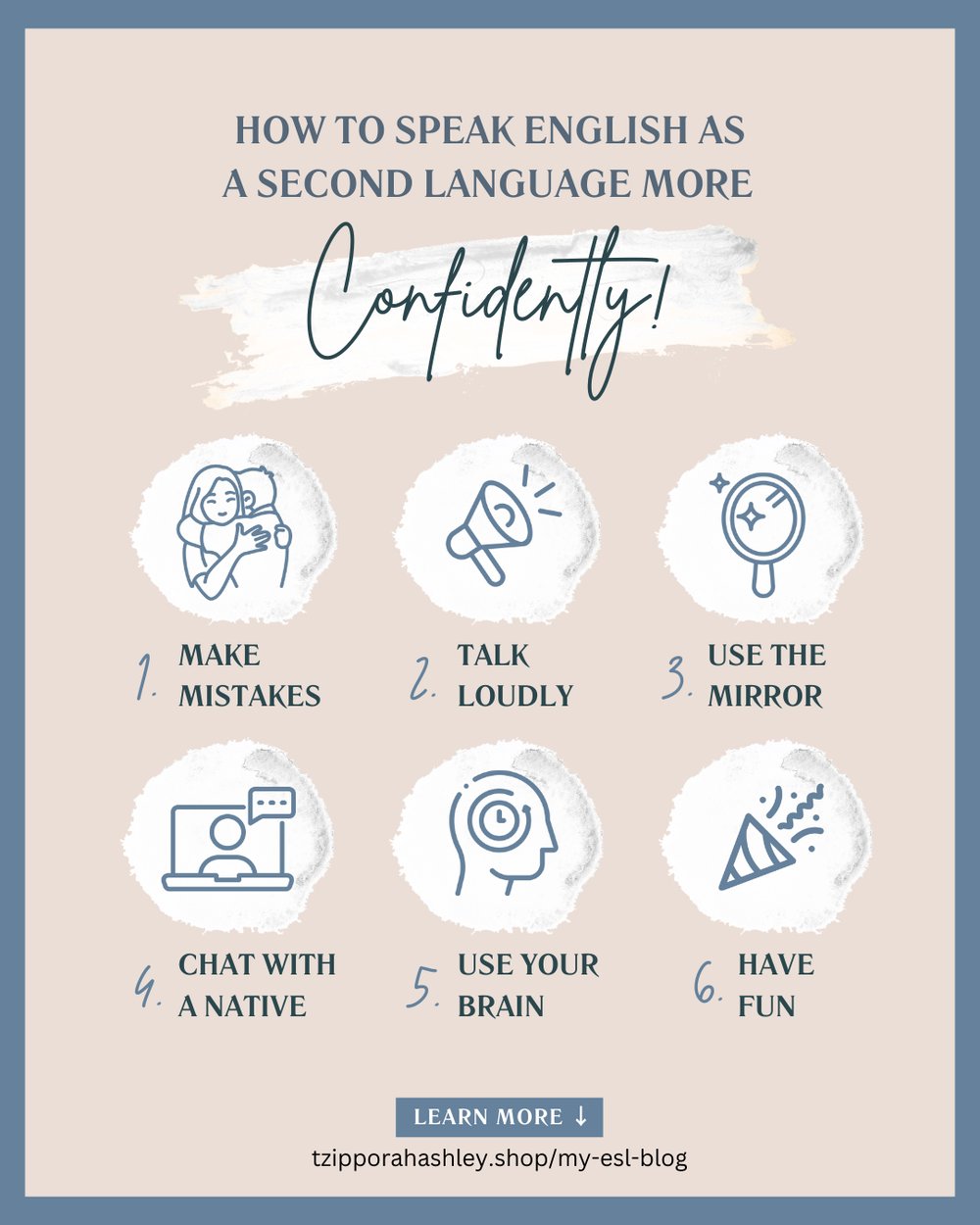
In all my years of experience teaching English as a Second Language (ESL), I've come to the conclusion that the following tips and tricks should be done in order to master English fluency:
#1 Be Willing to Make Mistakes
Never forget that the best part about learning any new skill is the process.
You shouldn't overwork, exhaust, or wear yourself out when learning a new language. Just like anything, things take time and need constant correction to become perfect. The more you are willing to improve your skills, the better you will become at the end of the matter.
All in all, just remember that an error doesn't mean failure in your overall goals and dreams. Keep pushing forward and don't be discouraged!
#2 Don't Be Afraid to Speak Loudly
English is a language that needs a lot of air and sound. If you don't push out the right amount of air, you cannot achieve the sound that a particular letter or word makes.
This can lead to obvious is communication, or even cause unintentional offenses created between you and another speaker.
For example, the word "beach" has a very distinct sound with the vowels /EA/ and the consonant blend /CH/. If you do not pronounce both parts of this word correctly, you can easily say another word "bitch", which is a very insulting and vulgar slang word.
The result of this mispronunciation can end with a slap to the face or a punch (fist) to the stomach, and I don't want you to experience that!
To avoid this altogether, simply commit some time to practice pronouncing the words you already know as close to the native pronunciation as possible. There are a variety of videos on YouTube you can watch that will help you achieve the right sound!
#3 Practice Speaking Everyday in the Mirror
This trick is, by far, the best and most effective one!
The method is simple: stand or hold a mirror in front of your face and begin to have a conversation with yourself in English! This is not only helpful for students who live in non-native English speaking countries, but also for those who are introverted, timid, or shy by nature.
Whether you're practicing very basic conversations or creating whole dramatic dialogues, this trick will get you to speak with more confidence immediately!
#4 Chat with a Native Speaker when Possible
Even though mirror practice will help with confidence, it will not help with vocabulary errors, grammatical issues, and other important corrections needed to master English fluency.
I HIGHLY RECOMMEND that you invest in yourself and join an online, language learning platform that connects you to native English speakers for engaging and enjoyable conversations!
There are many language learning platforms out there. However, here's a quick list of a few companies I will refer you to:
 Cambly.com
Cambly is an English language learning platform based in San Fransisco, California, USA.
You can practice with native English speakers anytime you want regardless of your English level. Teaching styles vary from teacher to teacher, but Cambly usually advertises itself as a fun, relaxing, and safe learning environment.
 NativeCamp.net
Specifically made for Japanese and other East Asian ESL students, Native Camp is a great English learning platform for beginners to advanced students to start practicing spoken English.
Based in Japan, the company offers more competitive pricing and allows you to filter teachers based on native skills and fluency.
 Engoo.com
Engoo is very popular, due to it's large recruitment of teachers and students worldwide.
One-on-one private ESL speaking lessons are available at anytime. In addition, the company also provides free learning materials that you can use during your study time offline in over 12 different languages
 iTalki.com
iTalki provides highly qualified and certified teachers that promise to engage with ESL students on a refreshing and enthusiastic platforms.
You can filter between native speakers or even bilingual teachers from over 40+ languages and dialects (example: filtering for Levantine Arabic versus Egyptian Arabic.)
⁓Note: None of the previously mentioned companies have sponsored me to advertise their services on this blog post.
#5 Practice what you've Learned
After learning new vocabulary, grammar, phrases, etc. on your own or with someone else, you have to practice what you've learned.
Repetition and memorization are key to any skill, and that includes a second language! Every time you learn something new, try to use that word, grammar, phrase, etc. in your own sentences.
Do this as often as possible to build up your memory! Make it a routine, even if you have to speak those words to yourself when you go for a walk, clean the house, or take a break in the break-room.
(Tip: Check your answers with a native speaker or teacher to make sure you don't develop bad grammar, pronunciation, or phrasal habits.)
#6 Make Sure you Have Fun
With everything said, never forget to enjoy yourself while practicing. Language learning is meant to be fun, not a chore, responsibility, or even a burden.
The minute English learning becomes burdensome is the time you need to make a change in your approach.
Make sure it stays enjoyable and remember why you started to learn this language in the first place!

✧| In Conclusion
Now after all those lovely tips and tricks, I will leave you with an old English phrases that goes like this:
"Practice makes perfect!" — John Adams (1791)
This phrases means exactly what it says: the more you practice, the faster and better you will become. Don't wait; start practicing your spoken English today!
TAGS: